

Short Answer
A dryer often takes longer when exhaust airflow is restricted, usually by lint in the vent line or a blocked exterior hood. Overloading, a clogged lint screen and problems with the dryer itself can cause the same symptom, so it helps to rule each one out.How Dryer Exhaust Airflow Works
A dryer heats air, tumbles it through wet clothes, and pushes the now moist air out through the vent. Drying depends on that moisture leaving. If the exhaust cannot escape easily, humid air lingers in the drum and clothes dry more slowly.
- Moist Air Leaves The Drum
- Clear Vent Line
- Exits Outside
- Moist Air Leaves The Drum
- Lint Buildup Or Blocked Hood
- Air Backs Up, Longer Cycles
Restrictions That Slow Drying
Lint In The Vent Line
Lint that gets past the screen can settle along the duct, particularly at bends, low spots and in long runs. As it builds up, the passage narrows.
A Blocked Exterior Vent
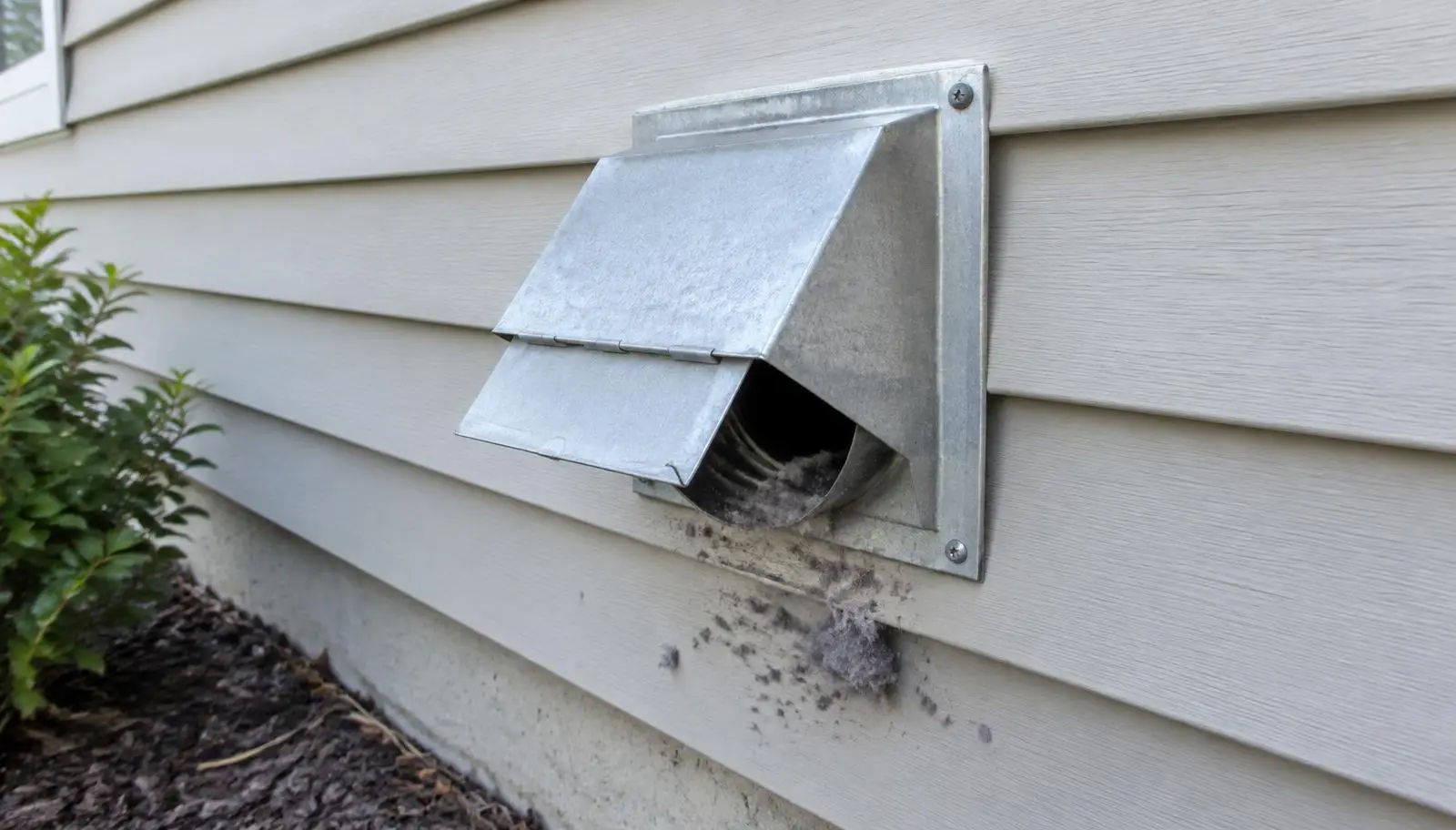
A stuck flap, a lint-packed screen, a nest or a damaged cap at the outside of the building can restrict airflow even if the rest of the line is fairly clear. With the dryer running, you should feel air moving at the outside hood.
A Crushed Or Kinked Transition Duct
The flexible duct behind the dryer can get pinched when the dryer is pushed back against the wall.
Lint Screen Vs. The Full Exhaust Path
A clogged lint screen alone can slow drying, so clean it before every load. If the screen is clean and drying is still slow, the rest of the exhaust path is the next place to look. For a broader list of warning signs, see signs your dryer vent may need cleaning.
Other Possible Causes Of Slow Drying
| Possible Cause | What To Check |
|---|---|
| Overloaded drum | Try a smaller load and see if drying time improves. |
| Very wet loads | Make sure the washer's spin cycle is finishing normally. |
| Clogged lint screen | Clean the screen before every load. |
| Wrong settings | Confirm the cycle and heat setting match the load. |
| Dryer malfunction | If the dryer is not heating, contact an appliance technician. |
Vent Cleaning Is Not Appliance Repair
Dryer vent cleaning clears lint and debris from the exhaust path. It does not repair heating elements, thermostats, sensors, belts or other parts of the dryer. If the vent is clear and the dryer still does not heat or dry, call an appliance technician.
When Professional Cleaning Makes Sense
If you have ruled out load size, settings and the lint screen, and airflow at the outside hood seems weak, a professional dryer vent cleaning is a sensible next step. This is especially true for long runs or vents that exit through the roof.
- Homes: upstairs laundry rooms and longer vent runs tend to collect more lint.
- Rentals and property management: slow drying is often the first complaint tenants raise. Cleaning between tenants helps keep it from becoming a recurring issue.
The dryer vent is a separate system from your home's heating and cooling ducts, which are covered by air duct cleaning.