

Short Answer
Common signs a dryer vent may need cleaning include longer drying cycles, clothes that stay damp, lint collecting around the exterior vent, a vent flap that barely opens and a laundry area that feels unusually warm. Each of these can also have other causes, so they are reasons to check the vent, not proof of a clog.What A Dryer Vent Does
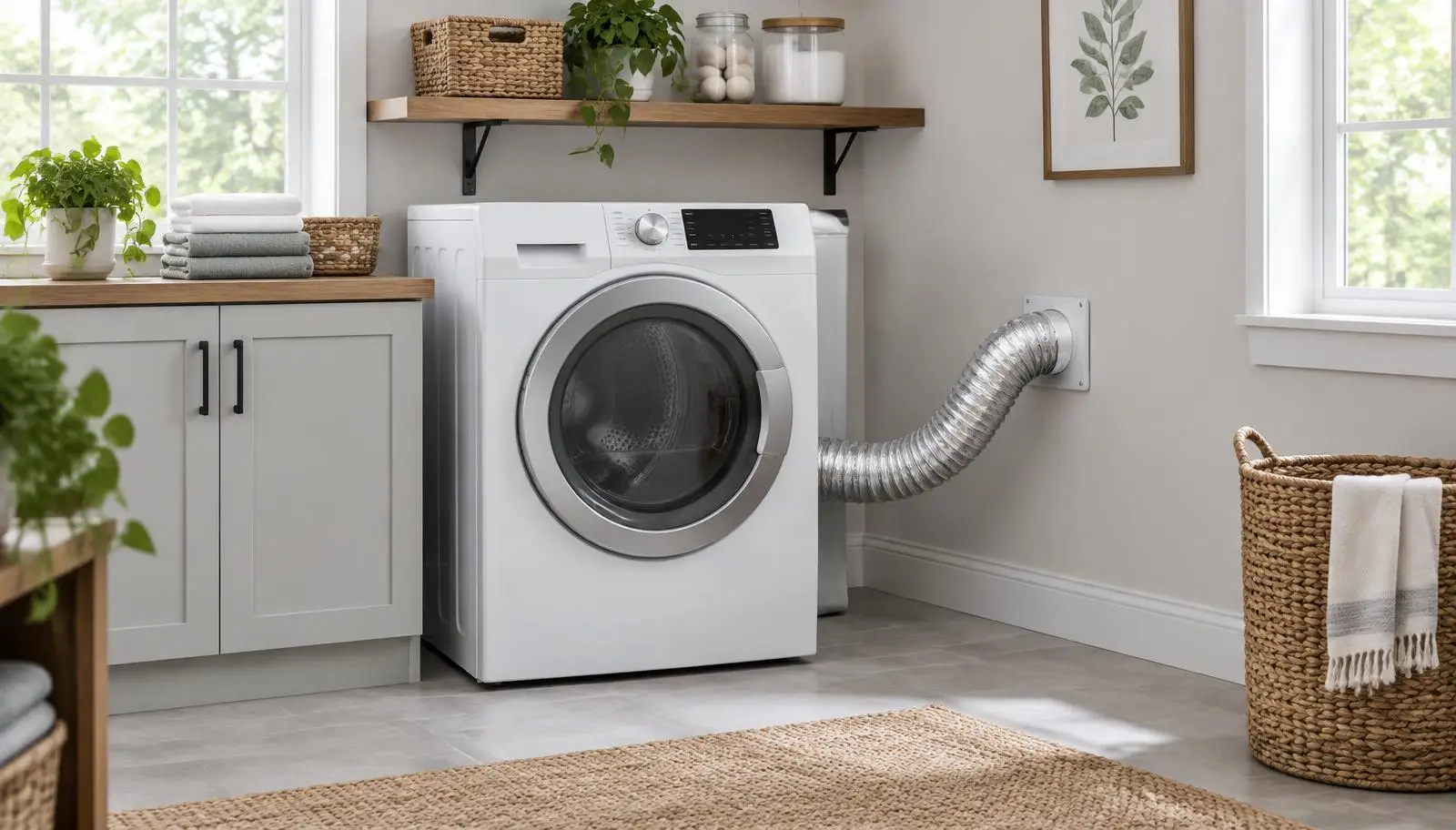
Dryer vent cleaning addresses lint and debris in the dryer exhaust path. That path starts at the back of the dryer, runs through a transition duct and the vent line inside the wall, floor or ceiling, and ends at a hood or cap on the outside of the building. Its only job is to carry warm, moist air and fine lint out of the house.
- Dryer And Lint Screen
- Transition Duct
- Vent Line Through The Building
- Exterior Vent Hood
The lint screen catches much of the lint, but not all of it. Fine lint that passes the screen travels with the exhaust air and can settle along the way, especially in long runs, runs with several bends and spots where the duct sags or is crushed.
Signs Worth Paying Attention To
Longer Drying Cycles
If a normal load that used to finish in one cycle now needs a second run, restricted exhaust airflow is one possible reason. When moist air cannot leave easily, clothes take longer to dry. We cover this symptom in more depth in why a dryer may be taking so long to dry clothes.
Clothes Still Damp Or Unusually Hot
Clothes that come out damp at the end of a full cycle, or noticeably hotter than usual, can point to exhaust that is not moving the way it should.
More Lint Than Usual
Lint collecting behind the dryer, around the door seal or on the floor of the laundry area can mean lint is not leaving through the vent line as it should.
Lint Around The Exterior Vent
Take a look at the outside vent while the dryer is running. A flap that barely opens, a screen or cap packed with lint, or lint clinging to the siding around the opening are all signs that the end of the exhaust path deserves attention.
A Warm Laundry Room
A dryer always produces some heat, but a laundry area that feels warmer or more humid than it used to can mean hot, moist air is not leaving the building efficiently.
Why The Exterior Termination Matters
The outside hood is the last point exhaust air passes through, and it is often where lint collects first. Screens, stuck flaps, bird nests and damaged caps can all restrict airflow even when the rest of the line is fairly clear. That is why a proper cleaning looks at the full path, including the termination, instead of just the first few feet behind the dryer.
Lint Screen Cleaning Vs. Dryer Vent Cleaning
| Lint Screen Cleaning | Dryer Vent Cleaning | |
|---|---|---|
| What It Covers | The removable screen inside the dryer | The exhaust path from the dryer to the exterior vent |
| Who Does It | You, before or after every load | Usually a professional, as needed |
| What It Addresses | Lint caught before it enters the vent | Lint and debris that has already passed the screen |
Cleaning the lint screen after every load is one of the simplest habits recommended by fire safety educators such as the U.S. Fire Administration. It does not reach lint that has already moved into the vent line, though.
Vent Restriction Or A Dryer Problem?
Not every drying problem is a vent problem. A worn heating element, a faulty thermostat or sensor, an overloaded drum or a dryer that is simply aging can all cause similar symptoms. Dryer vent cleaning clears the exhaust path; it does not repair the appliance. If the vent is clear and the problem continues, an appliance technician is the right next call.
Homes, Rentals And Commercial Properties
- Homes: long vent runs, upstairs laundry rooms and vents that exit through the roof tend to collect lint in places that are hard to see.
- Rentals and property management: tenants may not notice slow drying or may not report it. Checking vents between tenants is a practical routine.
- Multifamily and commercial properties: buildings with several dryers or heavier use can build up lint faster, and one visit can cover multiple units.
When Professional Cleaning May Make Sense
If you are noticing more than one of the signs above, if you have just moved into a home with an unknown vent history, or if the vent line is long or exits through the roof, a professional dryer vent cleaning in Utah is a reasonable next step. Keep in mind that the dryer exhaust path is a completely separate system from the heating and cooling ductwork that air duct cleaning covers.
So Fresh So Clean serves homes and businesses across five Utah counties. You can see the full list on our service areas page.
Helpful References